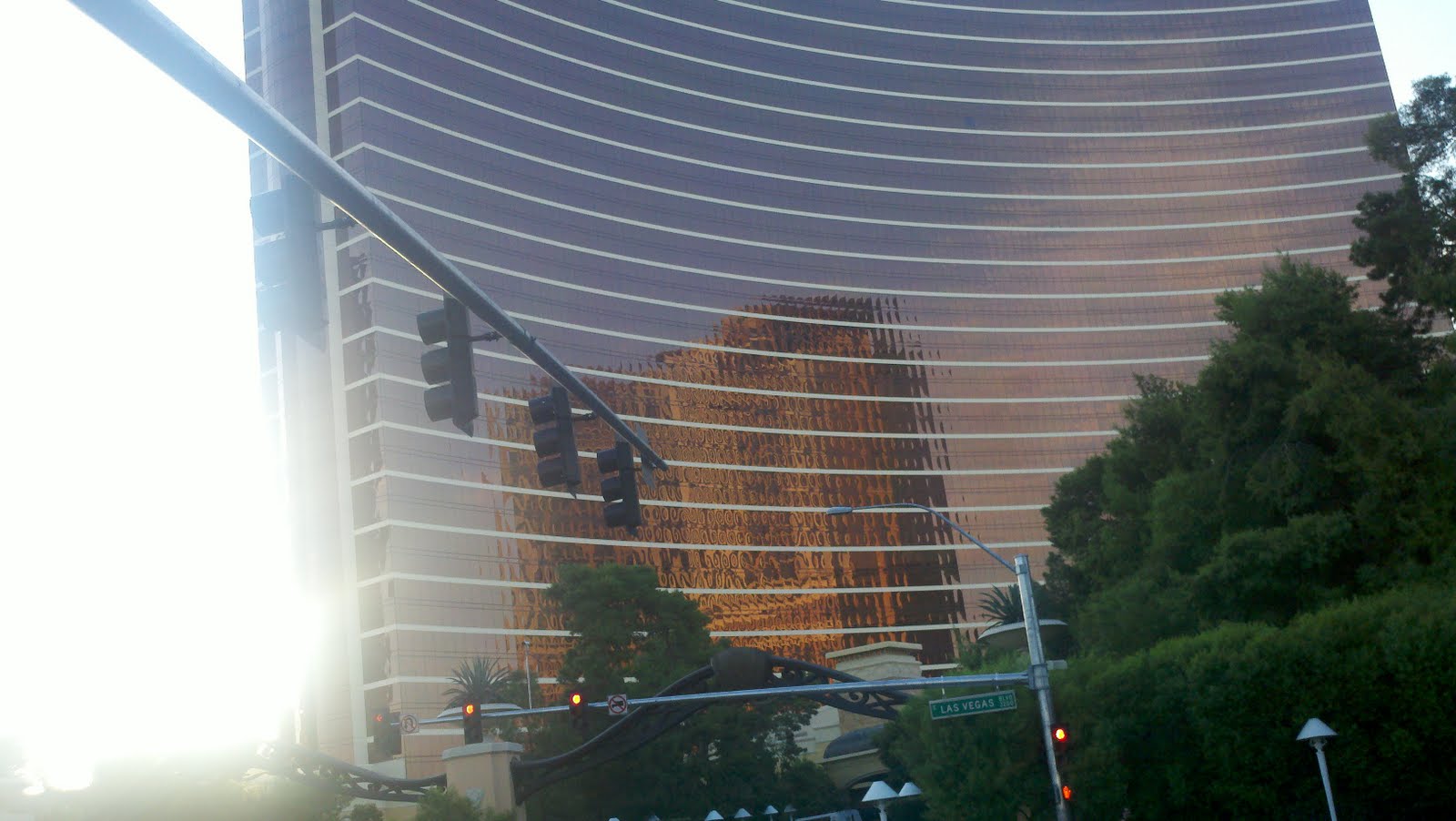
Wednesday, September 21, 2011

Racing - UCI Minimum Weight and Bicycle Technology


We all know about the UCI's pretty conservative weight limit, i.e. their minimum bike weight. It's 6.8 kg, about 15 pounds, and it's based on some long past assumptions, the main one being that the standard material in a bike would be steel or aluminum. The rule came about before carbon fiber worked so well and after a few documented bike failures.

(If this was Wikipedia I'd need a "cite references" asterix here, but they mainly involved aluminum frames, typically modified by non-engineers "on-site").

Nowadays, with carbon fiber established, bikes can weigh very little. Some bike companies have released factory production bikes weighing in at just over 10 pounds, or about 4.5 to 5 kg. With such a low weight a bike like that would be illegal to use in pro races.

Incredible, right? You and I can walk into a bike shop, plunk down a credit card (with a high limit), and walk out with a bike that's so nice that it's totally illegal to race in the Tour de France.

It seems wrong that this is the case, but it is. F1 drivers don't drive econoboxes, they drive the ultimate racing macines; ProTour racers should but riding the F1 version of road bikes, but they aren't - they're riding weighed down bikes, handicapped by the rules.

With a lighter-than-allowed base bike, racers and their teams have two ways of increasing weight:
1. Add ballast
2. Add functionality

Ballast

Of course the team can add weight to the bike. Glue a big slug of lead to the seatpost and you instantly increase the weight of the bike.

Cannondale, when the weight rule first came out, made an aluminum bike that easily dipped below the weight limit. They glued weights on the bike, illustrating that functionally the bike worked fine at the lower weight (safety and reliability-wise); the weights glued to the top tube wouldn't make the frame any stronger, nor improve performance. That was Cannondale's point and they made it well.

Not very functional weight.
(Photo taken from here)

The rules didn't change though.

Of course just adding weight on a bike don't increase functionality of the bike at all. Useless weight like this doesn't make sense. If you're going to drag 6.8 kg up the climb, you might as well drag something useful.

This brings us to...

Functionality

Right now, with a relatively heavy bike required by the UCI, pro teams have the luxury of spec'ing out heavier parts. This weight can bring greater reliability, better performance (typically rigidity), and more information (powermeters integrated into bike parts).

One can improve basic performance by using slightly heavier parts. It seems almost standard for SRAM equipped teams to substitute a steel cage on the Red front derailleur and stiffer chainrings in lieu of the allegedly flexible Red ones. Both these modifications make for a more predictable front shifting setup, making for better shifting performance. Although Red is a light component group, these modifications take a tiny bit of that away.

Of course one can improve reliability and strength. Using heavier rims, bars, stem, or even a saddle can improve durability, make crashing less catastrophic, and make for a more responsive bike. Cavendish's bike is known for its extremely rigid stem, and I'm sure his bars aren't far behind.

One can improve fit too, by using heavier parts. I've seen reports of racers using aluminum crankarms instead of carbon, mainly to get unavailable lengths. If you need a 180mm crank and the carbon versions only hit 175mm, you need to use the aluminum ones. Inbetween lengths (177.5mm for example) will require the racer to do the saLinkme thing.

Finally one can improve functionality by adding parts or features. Floyd Landis used a Powertap hub, one of the first contenders to do so, in the mountains. Taller aero wheels, giving the riders an aero advantage, suddenly become possible all the time, not just when willing to exceed the minimum weight. Likewise aero road frames can be substituted for the "super light" less aero frames.

However

Of course, even with a functionally optimized bike, a bike can still dip well below the UCI limit. Both teams and manufacturers have become creative in adding weight, with reports of seat tube weights, bottom bracket slugs, and other non-functional ways of increasing weight. The UCI needs to look at a bike that has all the functional weight-adding features and still falls well below the minimum weight limit. Such a bike would be a good starting point for a new, lower minimum weight.

And, thankfully, with the rule a bit outdated, the UCI promised at some point to modify the minimum weight.

Therefore it only makes sense that both racers (i.e. their teams) and manufacturers should be planning on a new, lower minimum weight.

How does that affect us?

Let's say the UCI reduced the minimum weight to something somewhat possible, like 4.5 kg (about 10 pounds). It could be rider dependent, i.e. a percentage of the rider's weight. Such a system would need some kind of broad cutoff points so that losing 500 grams of weight doesn't means redoing the bike. In other words, for each 5 kg increment of racer weight there'd be a proportionate amount of bike weight (a 50 kg rider would be required to have a 4.5 kg bike, a 55 kg rider a 4.7 kg bike, etc).

It could also be related to frame size, so that a smaller framed bike would have a lower minimum weight. This way a bike whose saddle height and bar-saddle distance is a certain amount would have to weigh a certain amount.

To reach these lower-than-friendly weights a team would have to carefully select all its components. Tall aero wheels may not always be possible, nor an aero road frame. Perhaps the racer's favorite (but heavier) saddle will need to be replaced. And getting a heavier, stiffer frame may not be realistic.

In other words all those functional upgrades I mentioned above would have to go away. The racer would be racing a less desirable bike, at least as far as function goes.

This would force teams to actually use products that help make the racer go faster or save energy or something.

One way to deal with a much lower weight limit is to embrace innovative and idiosyncratic technology. Such technologies and ideas currently overlooked will become much more significant when the minimum weight drops significantly.

For example, in a conversation with an industry person (components) about BB30 faults, the main advantage he mentioned was weight, or lack thereof. BB30 is extremely light, rigid, and allows for weight to be used elsewhere. Studies have shown that actual crank stiffness doesn't change that much.

A drawback is that long term durability (after replacing bearings multiple times for example) is suspect, with frame shells distorting and the like.

BB30 (and the SRAM version, PressFit30 or PF30), allow the use a significantly lighter bottom bracket axle, reducing the weight of the overall crank and bottom bracket substantially, without any penalty in rigidity. I know that my crank and BB (with a powermeter in the crank) weighs about 675 grams, much less than the 800-900 gram typical weights for a normal crank and bottom bracket.

Such weight savings become significant if the weight saved allows the racer to then put on some other functionally improved parts, like a taller more aero wheel/set, a powermeter, those longer cranks, stiffer chainrings, etc.

Likewise, if the pros really require the "rigidity upgrades" to SRAM Red, then making those upgrades suddenly have a penalty. I'm sure there are racers who will sacrifice that rigidity to stay at the absolute minimum bike weight. Michael Rasmussen was known for having just one bottle cage on his bike, so he wouldn't be able to carry two - it would be too heavy.

A very low weight limit would also call out inefficient designs cranked out by various manufacturers. Cosmetic curves in frames and such would penalize the racer. Frames would become more efficient, with engineering taking a step forward, "industrial design" a step back.

We'd also see some movement off the bike for various bike things. Right now there are no minimum weights for the rider's clothing or apparel, so it may be that we'll start seeing products mounted on the rider rather than on the bike. For example, instead of powermeters in bike components, racers can use a shoe mounted version. Any weight penalties for electric shiftingLink and other features become significant if they push the bike over the minimum weight.

So what would we see with a much lower UCI minimum weight?

1. Larger axle diameters. BB30 is great for the bottom bracket, but aluminum or carbon fiber axles in hubs saves weight too. Manufacturers will look to minimize weight by increasing axle diameters and using more exotic materials. I suspect carbon fiber axles will become the norm for the BB and maybe the hubs. The steerer tube is already carbon fiber.

2. A reduction in the cosmetic, non-functional frame features. Is having huge stays really necessary? Or a large headtube? Frame manufacturers will quickly optimize their framesets. Those that have poor design staff will end up with less-than-optimal frames.

3. Careful application of aero parts. Aero parts typically weight more than their non-aero counterparts. A tall 90mm rim weighs more than a comparable 30mm rim. Riders will have to be more careful when selecting components for a given day. Flat days will encourage more aero equipment; hilly days less.

4. Less data collecting. Powermeters add weight, and although data comes in handy, there are plenty of pro racers that race without power measuring devices on their bike. A slight (but psychological) weight penalty may be all that they need to ditch such things. Of course if the UCI starts tracking power as part of their anti-doping efforts, this would be a moot point (budget x grams for a powermeter).

5. Equipment malfunctions. Not failures, malfunctions. A less-rigid front derailleur, with a less-rigid chainring, can cause shifting malfunctions.

6. Lighter "regular" brakes. Currently the three main manufacturers have pretty normal brakes, very similar in weight and function. Innovative brakes can save dramatic amounts of weight, freeing up weight for use elsewhere.

7. Failures. Unfortunately lighter bikes, combined with the normal crashes and such, will cause more equipment failures. Although the UCI regulates some minimum strength (they test forks for example, so they don't arbitrarily fold under a rider), a bike that's been crashed may have some unpredictable failures. Hincapie's steerer tube failure is such a thing; hopefully the parts that fail will be less critical, like a rear brake or a seatpost or a saddle or something.

Although not necessarily cheap, lowering the minimum weight on bikes would encourage development of frames and components. Companies currently coasting along would be forced to start development again; companies currently exploring developmental ideas would be rewarded with a year or two head start on performance. We'll see less waste (less material used), better production (because without higher quality the lighter parts will fail), and more differentiation between bike companies.

I'm looking forward to the day the UCI lowers the minimum bike weight. The UCI will jolt the bike industry to action, making for very light, very high performance bikes.

And maybe, just maybe, I'll be able to ride a UCI legal 10 pound bike.

Friday, September 16, 2011

Interbike 2011 - Indoor Day Three

I got up a bit slower and later than the previous days. The Sinclair party tired me out a bit more than expected, and, honestly, I didn't think I'd be hitting the sack at two in the morning. Or 2:30. Or whatever time it was.

Nonetheless I roused myself out of bed around 8 AM (or was it 9?) and headed down to the show.

This guy looks like I felt.

The head above is from the SRAM pART PROJECT. SRAM gave bits and pieces to a bunch of artists. There was a rollerskating robotic Aliens/Predator kind of guy too, but I missed it. Full list here.

I tried to boost the attendee count. These are my SprinterDellaCasa mates.

Those folks above were part of the assortment of weird stuff I found in the show office. No idea where they came from but they'd sometimes disappear for a bit, returning from destinations unknown at a later point. They look more fit than I do.

A 70 tooth ring!

The largest chainring I'd ever dealt with before was a 59T, on a teammate's dad's bike. He and his son would ride up to New Hampshire from southwest Connecticut, a 19-24 hour ride (depending on wind, weather, and fitness). When the dad described the massive descents and trying to hit higher top speeds, I jokingly suggested getting a bigger gear.

I should have known better because he already got a Specialized TriSpoke wheel to increase top speed (he learned the hard way to skip the front for those gusty 55 mph descents). I happened to be looking at chainrings and spotted some oddities, like a 60T. I let it slip that these 60T monsters existed.

"A 60 tooth!?"
"Um..."
"Order me one!"
"Um..."
"When will it be in?"
"Um..."

Since I brought it up, I finally gave in. I tried to order a 60T but it was out of stock - I had to settle for a 59T.

I think I already posted these pictures but I can't remember.
These are from back in the day.

On the bike.
I think it's a 45T for the small ring, giving a 14T difference.

Anyway the large 70T ring caught my eye. I'm glad they weren't around when I had the shop - even with really aggressive gearing the small ring would have to be as big as 53T or so (for a difference of 17T between the small and large ring - it's kind of like shifting from a 53T to a 37T. To ride to New Hampshire with a 70/53 would be a bit much.

My main goal today, with not much on my agenda, was to go really fast at Circulus. They closed at noon so I had to get my act together. Unfortunately my stomach wasn't cooperating - apparently the late night at Sinclair was a bit much for my fragile (pronounced "fra-gilly") body.

Nonetheless I persevered, getting to Circulus at about 11:30 AM.

Fans.
From left (with camera at face) Kevin, Rich, Julie, and...
The guy with the white shirt, I forget his name but he's the one that convinced me to do this.

It's not bad. The surface looks slick but it's pretty grippy, treated with a secret agent that really improves traction, to the point that I was thinking of it for things like garages and other polished floor surfaces.

They even treated the concrete just inside the wood, helping those going up or down from falling when their front wheel hits the slick looking (but not) concrete.

It's the Circulus track, a small (50 foot diameter) track built by the pdw folks.

Here are some stills from the helmet cam footage I took. I didn't do any on Day Three as I'd lent out my helmet cam mount out on the evening of Day Two and hadn't retrieved it yet. But I did do some on Day Two, just slower than Day Three. Ultimately I'll have a clip together, but that's ultimately, not right now.

My view.
Actually taken on Day Two, when I was warming up to the idea of going fast.

The camera's view of the same shot (iPhone low res, from Kevin).
Again, Day Two footage, therefore I'm going pitifully slow.
I'd lean more if I were going faster.

Note that I'm going backwards. Yes, if you go backwards you help unwind the dizziness.

At least that's what I told myself.

So how does it work?

It works well. I mean, obviously, right? I'm here, writing about it. I didn't fall off the banking, even when I got going a bit faster. Here's how I got going on the thing:

First, ride around in a circle on the flat part. It takes only 4 mph to stay on the wood, 11 mph to go "fast". I'll get to the "fast" in a bit. 4 mph is not that fast so it doesn't take much to get up to speed.

Second, when you want to get on the Circulus, you need to kind of aim up it. The guy there said to do it like you're "walling" on a BMX bike. I nodded like, "Yeah, I know what you mean," but I've never done that ever. I figured it's like riding up a... wood track.

Third, once you get going on the wood, commit. It takes power to commit, at least for me on the BMX bikes. They didn't have any allen wrenches nearby (and I didn't feel like walking around to the tool booths to borrow one), so I only rode the low-seat-height BMX bikes. On those bikes it takes a lot of quads and hamstrings.

Fourth, once you want to stop, fight the "Holy smokes I'm going to crash!" vibe. Instead, coast and allow the bike to slow. I found that I'd come down off the banking a little too fast to stay on the concrete so I'd let the bike veer back into the banking, go up, then really turn a bit to come back down. By then I'd have slowed down enough to avoid going back up.

Fifth, if you want to go fast, stay below the blue line. It's not as glamourous but it's a heck of a lot faster. For a 5 lap sprint it's about 6 seconds slower if you're up the banking versus down near the floor. It helps to be able to extend your legs a bit more than I am in that picture above.

Sixth, stop after 10 laps or so. You get pretty dizzy when you stop. I found it helps to go backwards on the track for a bit (clockwise) to kind of "reset" the brain. If you've never ridden the track then do a backwards set as soon as you finish your first forwards set. This way you don't get your body hardwired to only go counterclockwise. If you keep going in just one direction, and it's easy to fall into that trap, it get to be pretty difficult to stand up without tottering like a drunk.

Speaking of which...

Seventh, and this is strictly optional, do NOT drink a lot of vodka cranberries the night before. Or tequila or rum or beer or any number of fuzzy brain drinks available around here. I set out on Day Three to do a couple flying 5 lap time trials, trying to come close to the 20.3 second time set on Day Two's competitions. When you do a hard effort, on a 50 foot wide circle, leaning at some absurd angle to the floor, on a bumpy surface, pedaling with the saddle too low, going totally anaerobic, it hurts if you've had fuzzy brain drinks in the recent past.

Although I felt pretty queasy for a bit after my first flying 5 lap effort (I mentally calculated where I had to run to get to the bathroom, or, worse, a garbage can), the feeling passed enough so I could do a second one.

Day Three footage was a bit faster but I never broke 20.3 seconds. Unfortunately I rode about a second a lap slower. I think my final two laps were much slower than my first three, due to the low pedaling position. I couldn't stand because I wasn't able to control the bike at speed while out of the saddle.

Kevin giving it a go.
He's tall enough to use the fast bikes with 700c wheels.

With Circulus on the way to Quality Bicycle Products (if your order has some weird errors in it, you may wonder if the picker just did a few laps on Circulus), I don't know when I'll be able to ride it again. But if I do, I'll know to come prepared with a few allen wrenches and a full helmet cam setup.

And, I have to admit, I got that hankering to get a BMX bike again, just to practice wheelies or walling or bunny hops. I'll probably get over it but still, I hadn't thought about that in a while.

After Circulus I had to chill a bit, literally, as I had overheated a bit. I got to talk again with some of my "IB2011" finds, the products that I figured were really cool. I'll write about them coming up, but they have to do mainly with small companies offering innovative products. With a bit of development, usually a cash injection, and a network for distribution, these products have a chance of really affecting the market. I also thought of some future trends for the industry (okay, one, for the road market), although again I'll write about them in future posts.

At 4 PM a voice came over the PA. I didn't record it, maybe I'll remember next year, but basically a female voice (IB staff) said that we'd finished up Interbike 2011. I could hear small cheers from around the hall. Small cheers because, by now, most of the vendors were close to losing their voices (like I did one year, with 15 minutes to go). Those folks must have applauded because I heard some clapping too.

All the hard work for the show management folks had finished, at least 99.9% of it. A few details, a post-show meeting or three, and that would be it. They could start thinking about and working on 2012. But, ever so briefly, they could think about relaxing just a bit. For the Interbike folks it's really hard work, putting things together for the whole year, culminating in just a few days of show, all their efforts for this one magical week in September.

Two of the Interbike ladies, Lindsay and Jenni (I hope I got that right), in the show office at the end of the day.
Those are foot massage things under their feet.

For the attendees it was like when a movie ends - the lights go on and everyone files out. All the scenes and music and parts and bikes and emotions and excitement from the show become a bit muted. Dealers stand around, blinking a bit, wondering what just happened. They could now relax with the only immediate task ahead being not to miss the flight home.

For the exhibitors it's the beginning of the final bit of the show - packing and leaving, like what race promoters do when the races finish up for the day. Having been there I know that some of the hardworking souls would be there until the wee hours of the night, working hard to pack stuff up before the show floor had to be cleared. The years I worked with an exhibitor ended up the hardest years of Interbike, and the hours following the show were the hardest of the hardest.

And, yes, I've lost my voice at Interbike, although it went with only 15 minutes to go. Dismissed for the rest of the show (all 15 minutes of it), I immediately headed over to the race DVD booth and, using hand gestures, bought a few DVDs.

When many of the lights go out you know it's done, and when that happened, we finally accepted that it was all over. As we walked out booths start coming down, revealing the mystery of the wizardry, the guts of the booth magic. It's a bit of a let down each year for me, this disassembly, at least until I worked with an exhibitor. I liked seeing the booths full and complete, nice displays and all. Seeing them start to come apart... it just meant that the show was ending.

In contrast to the Sinclair party the night before, Friday night ended up very tame. A bit exhausted, Kevin, Julie, and I went out for dinner at the Grand Lux (Venetian one, not the Palazzo one). Rich, caught up in some business, missed out on our early dinner, so we finished without him.

Kevin and I called it a night at that point. He had an early morning departure time (4 AM) to get home for real life stuff, and I had a slightly less early breakfast date. We talked about stuff, did some packing, packed away the various schwag, and texted and called and emailed friends and family.

I only had to get home to return to real life again. As magical as Interbike always is, it always has to end. Magic can't last forever because if it did it would become just "life".

Or, as the various vendors joke to each other at the show, where the incongruity of being surrounded by your passion yet working your butt off...

"So how's it going?" (preferably asked when booth is half set up or half brought down, or when it's 2 PM and the crazy busy booth has obviously kept the vendor from eating any regular food for 5 hours).

"Livin' the dream," with a big sigh.

Eyes meet. Grins all around.

"Oh, right. Livin' the dream."

Laughter.

Still, though, it is a dream. It's got to be, right?

Once again, dream or otherwise, I got to experience the magic of Interbike.

Here's to a great 2012 for all the exhibitors and attendees, to the media, and, finally, to the show management. I heard someone talk about coming back to Vegas. Therefore...

Viva Las Vegas!

Can't wait for Interbike 2012.

Thursday, September 15, 2011

Interbike 2011 - Indoor Day Two

Day Two dawned bright and sunny. I probably groaned a bit when I got up, but I had some time to work with as it was 6 AM. I remembered that I hadn't texted the first appointment (9:30 AM) to David and Kameraman Kevin, an appointment I set up yesterday. I wrote the text but decided not to send the text out just yet - it'd be better to send it out an hour or two later. I heard that someone broadcast emailed welcoming folks to Interbike the day before - everyone's smart phones beeped bright and early when that email arrived - at about 6 AM local time.

So, for me, no texting too early. I'd wait to send it.

I had to run an errand in the morning, before the show, so I set out bright and early. I walked over to the Venetian's garage.

Early. Sunny. Vegas.

I stopped to take some tourist pictures.

There's a Blue Man Group self portrait thing.

I'm standing in the lower right corner of the screen. The left hand of the left guy is holding what looks suspiciously like a painted ContourHD, just bigger.

At the garage I got into a big boxy SUV, my errand runner for this trip. As much as I like riding, I also like driving. I even like driving boxy vehicles - when my friends moved using a U-Haul truck (a smaller one), I offered to drive it for them. As a kid my mom drew a "city" on the back of a table cloth, setting up lanes and parking lots. I'd "drive" my Matchbox cars all over it, carefully staying in the lanes. My favorite cars had squared off edges, for precise lane positioning, and springy suspension, for replicating cornering forces. I liked driving without "spilling" over the road lines, the same term I used when I filled in my coloring books.

I'm driving a wide boxy vehicle and trying to stay inside the lane.

After some severe navigational challenges (I'm surprised I didn't end up in Arizona), I got back to the show, a second person with me now (someone else's Missus, and, yes, he knew about me picking her up because I was driving his car).

My tasks today would be to set up the schedule for the rest of the day for David, talking with vendors and such. I'd also note any interesting new things for David to cover. I also promised some folks I'd try out their display, which I'll get to in a moment.

I headed over to the media booth leisurely, setting up shop, checking emails, stuff like that. I saw David, wondered why he wasn't already on his way to his first interview, and asked him when he was heading down to start the interviews.

"You headed downstairs?"
"Why, what time is the first one?"
"9:30"
"Um, it's after 9:30"
"What?!"

Then I realized the forgotten, not-sent-yet text.

Luckily Kamera Kevin was there so the two of them split to start their morning. My heartrate appropriately jump-started, I headed out to make the afternoon appointments.

Normally I'd walk up to a booth, wait for someone to notice me, and then go from there. Sometimes I'd end up talking with a junior person, sometimes the boss. Since technically I can wait, I choose to wait instead of cutting into a potential customer's time.

One big booth had a lot of busy people, with the only free staff person sitting at a table. Posters and brochures covered the white surface, and the girl sitting there looked up as I approached. Normally I'd just ask who to speak to but in this case I paused.

Something wasn't quite right.

I realized I was looking at various versions of the same face - one on the poster, one huge one on a larger-than-life standup thing, and the one on the girl.

"Are you... her?" I asked, pointing at the poster.

She laughed.

Ends up Angela Naeth is a pro triathlete, a sport of which I know appallingly little (in relation to rules, anything-other-than-bikes, and personalities). It was her first time in Vegas, first time in such a big trade show, the first time signing stuff.

I asked my new favorite pro triathlete for a signature, and later, a picture for the blog.

She admitted that she hadn't expected such a big poster of her.

I also, in the midst of this, managed to set up an appointment with her sponsor (she ended up interviewed for InterbikeTV by David).

By lunchtime I'd completed my main tasks, booking the entire afternoon for David. I set out to do some stuff that I wanted to get done -main on my list were visiting some booths in particular, check out the Levi signing, and listen to Greg Lemond at the Look booth.

Although I checked out this one booth in detail, even doing a ride in it, I don't want to give up too much. I'll cover it more on Day Three, when I returned to the booth with a vengeance.

Hint: the booth is about 150 feet wide, 5 feet tall, and is made of wood.

I made a point of checking out Action Wipes. They saved me after the rainy Lake Mead ride, enabling me to wipe down even though I didn't have towels and such. Martha Van (as everyone refers to her) owns the company, and she's a great person.

Pickles? At Interbike? Martha Van here prepping cramp relieving pickles.

She was setting up a "Pickle On A Stick" giveaway. Hey, it makes sense, right? Tests have shown pickle juice to be as effective as electrolyte drinks in relieving cramps. You know, there may be something to that craving so ubiquitously credited to pregnant women, that of peanut butter and pickles, or something like that.

Rachel, a racer on a team that Action Wipes helps sponsor, relieving any potential cramps.

In the meantime I'd gotten a signature from Levi, at the USPro Cycling Challenge (aka Tour of Colorado) booth. With my friend Julie still in line I struck up a conversation with Rachel. Since the Action Wipe and Levi (USPro Cycling Challenge) booths were next to each other, we watched the long line of fans, Levi's polite and cheerful signing, and basically people watched.

At some point Rachel wondered out loud if the blonde to Levi's right, at the table, was his wife. I pointed at the woman standing right in front of us, like two feet away, doing the same thing we were doing.

"That's his wife, Odessa Gunn. She's an ex-pro, photographer, had a column in CyclingNews... she's really something. In fact I think she was better known than Levi back in the day. Usually she's in cowboy boots and hat, at least that's what it seems like from pictures I've seen of her. Strong rider."

"Oh."

Rachel promptly introduced herself to Odessa, and then me to her too.

Levi, signing posters for... Odessa?
She explained to us afterward that she was getting signatures for friends.

I headed upstairs to try and catch the Look presentation of Greg Lemond's Tour win's 25th anniversary. He used carbon fiber Look frames, racing with La Vie Claire. He did a Q&A session first, answering questions about his Tour and racing career.

Very interestingly the poster in the booth showed him and Hampsten climbing together side by side, a picture I'd never seen before. Conspicuously absent was Bernard Hinault. It was taken the day Lemond counter-attacked Hinault's big attack the day before, taking back a huge amount of time and closing up the race between the two teammates.

Lemond explained Hampsten's attack during the Q&A session. From reading the race reports and listening to the commentary, Hampsten's attack seemed like a dig at either Lemond or Hinault, as he went so fast at the beginning he'd have taken the yellow if he'd continued the pace. Ends up that Lemond told him to attack to keep Hinault back (he'd come off a bit earlier) and so even if Hinault bridged he wouldn't be able to go (chasing a teammate etc). Then, when Hampsten had a gap, Lemond went, decisively, bridging quickly to Hampsten, letting him make pace, then going again when he'd recovered. Lemond would solo to the line and he'd go on to win the Tour.

If I had a poster I'd put a picture of it here but I don't so I won't. I'm satisfied with my picture from last year,

Then some of the Look booth staff came over to our table. Apparently we were leaning on the "signing table". I looked to the right at the long line of people waiting for Lemond and his Sharpie. As we "cut" when we leaned on it, we weren't "in line", and we had to move off.

Lemond. He has a strong and loyal following, including yours truly.

By the time we got out of the Look booth the end of the day approached rapidly. There were a few events planned for the evening. For some it'd be the Mobile Social, a ride from Interbike to Fremont street. Apparently 150 or so riders went, mostly on eclectic bikes.

Three of the riders met up. In front of us.

David, Carlton Reid, and Josh.

David is the guy doing the InterbikeTV interviews. He also does the Fredcast, and, along with Carlton and others, does the Spokesmen. Carlton has his own thing, BikeBiz.

What's funny is that Mrs SOC commented that she loves David but really loves Carlton. Of course I told both of them, and, being the good friends and such that they are, they both cracked up about it.

I have to admit that Carlton did ask for a screenshot of the comment. All in good nature of course.

They are all riding Tern Bicycles (by choice - they all seeked out the Terns themselves, although Josh has an alterior motive - he's the guy behind Tern), a sweet folding bike that is about as rigid as a bike can get. I rode one at Outdoor Demo and it was incredible. The small wheels took a bit of getting used to but the bike responded so crisply I overgeared myself all the time, thinking "I just accelerated way too easily, I need to shift up".

For me and Kevin it'd be a dinner with Psimet and his crew, shop owners out from Chicago-land. We had dinner at a pretty chic place, a bit more than I expected anyway. Great conversation, a bike geek's dream. I sipped my water (maybe I had a Coke too?), had some pasta (thinking I'd be riding tomorrow morning), and had a great time.

Kevin wanted to check out the Sinclair party so he and Psimet and crew left. Someone else, a jaded Sinclair party veteran, described the thing as 8000 guys and 6 showgirls. Based on his somewhat negative view I decided to pass, even though everyone else wanted to go.

Plus, as I'd mentioned, I thought that maybe I'd be riding early in the morning.

I was on the way back to the room when Julie started texting me, asking me to come over to the party. Then Kevin piped up. So, okay, I turned around and walked to XS at the Encore for the Sinclair party.

Kevin met me at the door with a wristband, allowing me to bypass the line (and, for those without a VIP pass, the $50 cover) and making the whole scene a little more unreal.

Because, as I've come to realize, Interbike is totally unreal.

As a Sinclair party virgin I took in the sights and sounds. The first thing I noticed (honestly) were two totally incongruent things in a night club - a time trial bike and a road bike, each spotlit so they stood out in the dark room. I'm a bit fuzzy on the details but I want to say one was a Argon, the other a Stevens? That would only make sense because Sinclair distributes them.

The next thing I noticed were not wearing Sinclair distributed products, not unless Campy makes sequin minidresses and Carnac makes high heel shoes.

Yep, the show girls. Really they were more like dancing girls. I saw such creatures eons ago at an old club sponsor 7 Willow Street in Portchester, NY, in the early-mid 90s, but since then, I don't remember any club dancers.

A rough picture illustrating that, yes, there is a bike here.

And, contrary to the jaded observer's description, there were a number of women there, not just the showgirls, but he accurately described that the overwhelming majority would be male.

I had a few drinks, ordering vodka mixes now that I'm a pro at ordering them. Well, I don't know if it's a "vodka-cranberry" or a "cranberry-vodka". I guess it's like mixing up the 11T and the 23T, a cog's a cog, right? Whatever I said, the bartenders (split evenly skimpily dressed girls and button up shirt with muted color tie guys) got it right. At the "Strip casino" drink prices they knew how to figure these things out.

Although Kevin headed out a bit early, the rest of us closed the party - at precisely 1 AM the lights blinked on, the music stopped, and the place resembled a post-concert venue. We hung out a bit as the place slowly emptied out, then headed our own ways.

As the only one headed to our building I walked back in a solo Vegas/Interbike haze. The vodka helped, I admit, but so did the warm and dry weather (at home I'd be either shivering or sweating while batting at mosquitoes), the lit up night (so it was like daytime at night), the cleanliness (NYC might be busy at 1 AM too but it's a lot messier), and the empty expanses.

No threatening criminal types.

No soliciting.

Just a pleasant walk home.

Tomorrow would be the last day of the show. I already skipped the morning ride, but I hoped to accomplish some final surreal things before heading back home.

Wednesday, September 14, 2011

Interbike 2011 - Indoor Day One


After a late night out - we had dinner after the Lavo party and got back at about 2 AM - I snapped awake at about 6:30 AM. I wanted to get to the show around 8, an hour before the main floor opened (the first floor opened at 8, the second at 9). I showered and dressed quickly, fortunate that I felt no lingering effects of the night before.

Wearing my new shoes for only the second time ever, I set off. Last year I broke in brand new shoes at Interbike too - I highly recommend this method of breaking in shoes, especially if you believe in the "dive into the deep end" method of learning how to swim. Anyway, with my now-molded-to-my-feet shoes slapping the concrete I caught the shuttle to the show. Unbelievably the clouds were emptying out again - it was raining for the third day in a row (?!). After a long drive in the shuttle me and my shoes got to the show in good order.

The first person I recognized, other than Rich, was Nelson Vails. As usual he dressed to the nines, in a suit, tie, and even the matching ruffles sticking out of his jacket pocket.

Conspicuously absent?

A lanyard holding a badge.

Rich asked where he had his badge.

"No badge. I don't need a badge."
"What do you tell security?"
"I don't need a badge. I walk up and when they ask me about my badge, I tell them 'no badge, but check those guys' IDs'. So they let me through and checked all the guys behind me for ID."

Only Nelson could get away with that.

We walked up to the show doors, before the show opened. The security guard let Nelson in and checked our badges.

I felt almost lucky I didn't have to show my ID.

Nelson checked out the Circulus track, a small (50 foot diameter) track built by the pdw folks. The pdw folks were really friendly and really encouraging, inviting us out to check out the track. Nelson asked if he could walk in and poke around.

The badgeless Nelson Vails, 1984 Olympic Gold, 200m sprints, and hotel management lookalike.

Nelson declined. But me?

Hm.

I have to think about that.

Artwork.

On the way to the media center we walked by the art display. The pieces here were commissioned by Interbike (I think) and the proceeds goes to various bike advocacy things. Something like that.

Once at the media center I realized I forgot the MiFi little card thing and my USB phone charger. Luckily the Nissan display of the Leaf also had a charger station - I used it to keep the phone from going critical. The MiFi was less an issue, although there are so many networks in here that you could probably hold up a fluorescent bulb and see a glow.

(You can try this under high tension power lines... just don't stay there too long.)

I managed to find a copy of the Show Daily, a review of what happened the day before. Lo and behold, what did I find?

Hunter, with white helmet, representing Connecticut and Cheshire Cycle.

I got into my role, scoping out stuff and setting up appointments for David. It's tough trying to coordinate all that, but overall it worked out pretty well. My role this year was more booking and such so after taking care of the day's schedule I got to browse around.

I stood in line for two signed posters (Dave Z and Ryder H), small posters (excellent for transportability), but otherwise checked out only a few things.

Dave Z's shoes say "Z". Sort of.

He seemed ruefully resigned to his autograph duties, but he still did them. I have no idea if these guys remember folks from one signing to another, but I imagine they remember the real oddballs.

Hopefully they don't remember me.

During the day I saw Richard Masoner, aka Cyclicious. He was munching on pistachios. I had to take a picture because the Missus had bought me the exact same kind of pistachios just a week or two ago.

Cyclicious Richard Masoner, with pistachios.

The first indoor day always seems busy. The booth girls are around usually on this day only. Everyone's dying to see what's out there. And every blogger and cycling news site is scrambling to scoop the others.

The Garmin booth was... crowded.

Believe it or not I did little research on anything this year, so although I saw the mobbed booth, I didn't try and take time away from those in there. I felt a bit overwhelmed with the show this year for whatever reason. I had to get used to the floor layout, figure out where the two sets of escalators sat (to get downstairs), and figure out where some of the office rooms sat.

The day rushed by, my legs tired, my feet reasonably okay, the shoes spectacular from a comfort point of view.

We had a short break to coordinate travel and such, then jumped in a minivan for a short drive. Tonight the after hours stuff was pretty tame, at least compared to last night. I stuck with drinking soda and water when we went to...

VIVA CROSS VEGAS!

Sorry. It's just that it's one of those things you can't say quietly.

Subaru bell.
I chose that side for this picture in honor of the Rent's team's sponsor, New England Subaru.

I figured this was a great way to end a 10 hour day spent on my feet - stand another few hours on uneven ground. By the end of the racing all sorts of weird muscles in my legs were cramping up.

Now, mind you, you really haven't seen much 'cross here. There are a few reasons for this.
1. I don't race 'cross.
2. I've never raced 'cross.
3. Even if I wanted to try it, I don't have a 'cross bike.

Although properly impressed with the athleticism out there, within a few minutes of watching the next race up (Elite Women's), I realized 'cross is really not for me.

For a moment I had some hope, a flickering. The field looked bunched up, like a crit field on a really narrow grass course, blasting by at speed, just after the start.

Then, within a few minutes, the group first strung out, started splitting, and then blew up into a million pieces.

I looked at how hard the women worked just to maintain speed on the tire-sucking grass and dirt. I thought about how it'd be to be there, to try and power through a hundred yards of muck, turn, do another hundred yards, all while never being able to coast or really draft or anything to ease the pain.

I thought of me doing such a thing.

"No way."

Then the Pro men went off. Holy smokes! Barrier to barrier at the start, they practically took the spectators' hands, heads, and cameras off.

Although it took a couple laps for the group to thin down, it still followed the same pattern. Mad rush at start. Racers blowing up as they hit the wall while trying to maintain what would essentially be about the same power (i.e. to power through dirt you need to pedal pretty hard - there's no coasting there).

As a given racer's fuse expired, he'd blow up and drop off. His position in the field at that moment depended on his skill at moving up, his cornering skills, technical skills in the run up, etc. The exploding racer would then typically leave a gap.

Others would go around, try and close it, redlining yet another racer or three.

More gaps.

More going around.

And even more gaps.

Interestingly enough I saw riders way up front blowing up early - it seems that they either went way too hard to get position or they had better technique but less fitness than those behind. I suspect the latter because 'cross is like running - if you can't hold a certain pace you get shelled, period.

No clever riding, no saving grace through technique and such. If you can't go fast, you lose.

Then, after thinking about the implications of the different types of terrain offered through the course, I thought of my ideal 'cross race. If such a creature popped up I'd think about trying it. So, if you want to get me on a 'cross bike, this is the course you need to make.

- Lots of corners, mainly on downhills
- As much pavement as possible
- Run ups as necessary
- Not a lot of flat stuff.

If you read into the requirements you'll realize that such a course would emphasize technique more than fitness. Corners, fast stuff (where you can draft if with someone), run ups, those all favor a crit-type rider. It avoids the flat power stuff, the stuff that requires super hard efforts, where wattage becomes king.

I had fun watching, my right ear hurt from someone ringing a bell right next to it, and I grinned a lot. After the races we packed up and headed out.

I wasn't sure how to summarize the whole 'cross race but then this car rolled by.

Piled into the car.
There's someone in the trunk too, maybe two of them.

It's what 'cross is.

Tuesday, September 13, 2011

Interbike 2011 - Outdoor Demo Day Two

OutDoor Demo (acronym an unfortunate ODD) day two, or ODD2. We started the day early, heading out for the Tour of Lake Mead. We had to get gas first though, and Kevin stopped at a gas station that he remembered had something weird - 100 octane gas.

100 octane!

When you think of it there are probably people who use such gas for powerboats and stuff on Lake Mead.

Still, though, it's a bit weird. I've never seen such a thing.

Bonus - you can get diesel on the same pump.

Once there we got ready for the ride. It looked threatening out there, big clouds over the valley below us, rolling towards us. Lightning flashed every now and then, thunder following.

We lined up at the Strava start point, rain starting to fall. Strava is a new social media thing where riders can record their ride and post the stats to the Strava page. There's a lot of instant analysis possible, especially in its deluxe format. For basics you see the distance, route, time, and average speed. If you pay the membership fee ($6/month or $59/year) you can see all the regular power stats - various versions of time/power (like 20 minutes power), speed, cadence, etc. I decided on a lark to do the Strava thing for the ride.

I regretted not swapping my tires out, the few year old kind-of-hardened-rubber ones for the fresh, soft, pliable tires on my aero wheels.

I also kind of regretted not ever getting wet weather brake pads. The dry weather ones are great in the dry but in the wet work about as well as rubbing wood blocks on polished granite.

The first bit, all the descending on narrow bike paths (which also borrow storm culverts), would really test my completely non-optimized set up.

Yesterday I did a recon ride on that bit on the electric (and, at the end of the ride, the non-electric) bike. Knowing what to expect, I figured I wanted to be near the front. Only the first 10 or 15 would be able to go fast on the initial descent - those following would inevitably be held up by someone going slow.

Of course it isn't a race, and with my less than optimal set up, I decided not to push my way to the front. Everyone rolled off and I found myself well and truly buried mid-field.

Start of the ride, kind of.

The brakes scared me a bit more than even I thought they would, my hands getting tired from hauling on the levers so hard. This was just to bleed off speed - if I had to stop I'd have to use some terra firma or similarly fixed man-made structures.

I lost my wingman Kevin when I stopped to check the helmet cam (status: wet but working), then really pushed to try and catch him. With the group scattered from here to eternity I got to descend at a faster pace, able to plan my braking 10 or 20 seconds ahead, not a tenth of a second.

Once the route flattened out a bit (but still a downhill), returned to the nice-traction roads, I caught up to a waiting Kevin. We put down some speed, rolling along, like the good old days. He claimed he had problems staying on my wheel - he had a compact crankset with a 50T, I was running the tandem chainrings, the large one being a 55T.

But he quickly showed his fitness when he dragged me along, pulling at a hard pace. I blew up somewhere around there, let him go, and reverted to my "plodding" mode.

The rain, painfully hard at times, forced the park police to cancel the event. I turned around, waited for the first group, and saw a familiar face - Hunter, a strong rider from back home. When I joined up with the group I realized just how poorly my brakes worked, having to desperately grab brakes just to keep from running into the back of people.

I rode to the side. If anyone slowed dramatically (i.e. coasted) I'd probably run into them. Not wanting to be the idiot that took out the bike industry peloton, I decided to take a huge pull, shelling myself when I swung off.

So I hit the front in the 55T. The rain pouring, I gritted my teeth, trying to lead out the rest of the group to the bottom of the next climb. The camera van rolled by.

Please, take a picture!

The window rolled down. A lens poked out.

I assume the shutter clicked.

(I'm still trying to track down the shutterbug.)

I pulled off and sat up. In 30 seconds they were gone.

I thought of excuses, like maybe I had a flat tire, else I'd have been able to keep going.

Luckily for me, while riding with one of the IB staff that joined me afterward, I noticed that my front tire seemed awfully soft, even for a wide rim set up.

The flat tire.
Mavic motorcycle is off-screen to my right.

I rolled up to the Mavic support motorcycle. He was running out of wheels but he gave me a tube so I could swap it out (this let me save the long valve tube I carry around). Ends up he's a guy that has a shop in Massachusetts, some of his guys do Bethel. Small world.

Dirty bike.

I stopped the Strava recording, an app on my phone. The phone then uploaded the ride info to the Strava site.

Wow. I'm... not that fast.

To put things in perspective one of the Strava women rode at 20+ mph, did 272 watts for 20 min, and basically annihilated me. I was picturing this powerhouse type rider and asked if the rider was around. To my surprise the Strava guy leaned over to the petite blonde a few feet away.

"Elle! Can you talk to this guy about your ride this morning?"

Ends up she's "just" a Cat 2 (I had to ask about her category before she reluctantly told me, a sure sign she was a 2 or a 1 or a pro) and "struggled" when the front group disintegrated itself. She said it was pretty hard - she spent 42% of the ride at her threshold. All I can say is that I wish I was that strong.

I don't have my power stats as my finicky wire didn't pick up the power/cadence bit. But thanks to Strave I know I averaged 14 mph on my ride. I went pretty hard at times, not so much at others. Still, though, it was a tiring ride. I ended up collapsing in fatigue in the car, taking a brief unplanned nap.

Refreshed I walked around a bit. I did some stuff to earn my keep, but that's kind of boring.

Well, one fun bit was snagging test riders to see what they thought of Outdoor Demo, of the day, of the bikes. I had a good score - only one rider didn't want to talk. Everyone the others stopped all grinned sheepishly and rode away.

Kevin the Kameraman, David @Fredcast, and a guest (shop owner from Texas I think).

"Kameraman" reminds me of something I thought of during the day. I saw Markus Storck walking around, a very distinctive looking guy. I heard a snippet of his German accent (or just outright German), and it made me comment to one of the IB guys walking with me.

"A German accent legitimizes any technological explanation."

He laughed.

"Yep," he said, "and if there's a K involved, it's even better. Like Kompressor."

The Kameraman is not German, but he's not the same Kevin as my long time friend.

At the end of the day we headed out for an industry party at Lavo in the Palazzo. The line didn't seem that long when we got there, but it grew and grew. When non-industry people asked why we were in line (it's like the Soviet Union - you stand in line first and find out what the line was for second), the big bouncer types started herding us into a line that apparently stretched out the doors (where I was in line) and onto the street. I figure there had to be a few hundred people before they opened the doors.

We were waiting in line for (gratis) 200 copies of the 7-Eleven book just released. Better yet a bunch of former 7-Eleven team people would be signing the book.

I got the book, walked up a few flights of stairs, and into a darkened bar. I spotted, unbelievably, Jock Boyer, the first of the modern US era riders. He's placed as high as 12th in the Tour (I think), 5th at Worlds, and was prominently featured in English-written racing magazines in the 80s.

I went up to him and asked him if he could sign my book. It was more intimate than a regular signing, mainly because it was so loud that he had to lean forward to hear my yelling.

"Yeah, lemme get a pen. Hey, Ron, can I borrow that?"

I looked to my left.

Ron Keifel. First 7-Eleven rider to win a race (a stage). Got 2nd in a stage in the Tour. He had talked that day of averaging insane speeds - whenever he looked down they were going 60 kph, 36 mph.

In the darkness I hadn't recognized him.

I couldn't help myself and blurted out, "Oh my God!"

I think I did it three times in a row.

(And, yes, I really am grown up. Really.)

They grinned, both signed, and they passed the book to the left.

Greg Demegen.

Holy smolies!

So on and so forth.

Jim Ochowicz, the director of the 7-Eleven team, was there. Danny Van Haute, now the director of the Jelly Belly Team. A slew of others. And they all signed my book.

Signed by everyone.

Then we reaped the second bit of the offerings - free vodka drinks (the reason why hundreds more people lined up). Any drink with vodka in it would be free. I don't know any vodka drinks so I polled the people next to me on what they ordered. Vodka cranberry. So be it.

Then, sitting there with all-round good guy Jim M, I listened in as others ordered.

I learned about a Red Bull variety. And a 7-Up type too.

The bartenders were busy.

Things were good.

Monday, September 12, 2011

Interbike 2011 - Outdoor Demo Day One

I woke up with a start when the alarm went off. It was 6 AM local time, 9 AM back at home. Groggy, I got ready for my first long day here in Vegas - a nice hot day outside, from 8 AM to probably about 6 PM.

First, the shower. Before I hopped in I realized I forgot to pack shampoo and a razor - inevitably I forget something if the Missus isn't with me. The hotel conveniently provided some shampoo, but the razor I'd have to buy later.

Once in the shower stall I almost slipped on the granite floors. In my shower at home it'd be okay, I'd just stick an elbow out and lean against the wall, no different than a little bump in a tight crit.

In this shower, though, it was a bit more spacious. In bike terms the walls were a bikeathon rider away. I'd have to extend an arm and I'd have a chance of putting my hand through some plate glass or smash my knuckles into some more granite.

Fortunately for me I managed to get out of the shower alive and well.

Luckily I didn't forget too much other stuff, and I managed to dress myself and get out the door.

Sans a cap, a critical accessory when outdoors in the desert.

Yet another thing that I missed, the Missus didn't not miss (since she's not with me), and therefore that I lacked. I had a tough time even with sunglasses but luckily I managed to score a precious cap.

Another cap for the household.

I also forgot any kind of waterbottle, especially the nicer insulated one. A savior dropped by and gave me one of these, filled with cool, refreshing water.

Great for use when walking around in a desert.

With that I was set.

We ran into an industry icon early on - Leonard Zinn, the framebuilder guy and tech advisor guy on the VeloNews site. He had a sweet custom frame set up. Looking at it I realized that he has to just unscrew the couplings, throw everything into a box (since the tubes are titanium it's pretty tough), and get on a plane.

Five S&S couplers. Five!
Don't forget the one in the stem.
He needs some insulated bottles.

Of course you need to back up your writing. Zinn does - he rode from the Strip to the Outdoor Demo area in well under two hours. Incredibly it seems he didn't drink anything on the way over - he arrived with two full bottles.

I couldn't get here in two hours this spring. In fact I couldn't get one town away from here in two hours. So Zinn did a good ride to get here.

I found a few interesting sites, my favorite one here.

The cowboy hat helps.

I love this picture because of the incongruities. I understand the hats - anyone who's been to an Outdoor Demo here will understand the need for a hat under the powerful sun. But the hat, the non-technical clothing, on the most technical of bikes... I had to take the picture.

I set off to recon the beginning of the Lake Mead course, to make sure that the route would work okay for a group ride. Since I didn't plan on riding here I had no kit. Someone suggested riding an electric assist bike. In sneakers, regular shorts, a nice, comfy electric bike should work well, allowing me to coast past riders on uphills.

I figured this would be a great test for the electric bike, me dressed like a casual bike rider, riding up a really long hill (3 point something miles).

On the way to the booth I stopped by the free ice cream stand and got a free popsicle for the uniformed guard standing at the entrance to the show. He really appreciated it, shook my hand. He never asked for it but, standing in the 95 degree heat, in uniform, he looked uncomfortably hot. An ice cold popsicle really helps.

Remember the others, right?

Right.

With that done we went to the booth with the electric bike (it's not an electric bike company, just a booth with an electric bike).

What I didn't consider is that as the day closes at Outdoor Demo any electric bike batteries out there will be pretty depleted. I asked the guys at the booth if they thought it'd make it. 3 of 5 bars, the red E on the battery meter lighting up (none of the greens).

One guy, who'd checked the battery, said that he'd play it safe and ride a different bike.

I thought about it.

Heck, you only live once. I took the chance, slammed the seat all the way down (of course), wobbled mounting the bike, and rolled away.

How did it go?

Let's put it this way.

It's amazing.

I pedaled lightly and the bike would roll along virtually effortlessly. I'm seriously considering commuting on an electric bike. You can carry some heavy stuff, so going and buying a bag of sugar doesn't seem too outlandish.

There are different ways to do this but it's just cool. Electric bikes only need to gain a bit more traction, get a bit lower in price, and they'll be all the rage among non-racers.

They'll be the focus of race by racers too, because racers will get tired of being passed by recreational riders on steep grades.

Seriously, it's that good.

However, and it's a big however... if I have doubts about a battery's charge, I'll now carry an extra battery. And I'll try and have another electric bike bike-rider on standby to literally tow me back.

As it was, we got down to the Lake Mead access road (all downhill), turned around, and the battery decided to quit.

Now I had an extra-heavy regular bike with extra drag (the electric motor will try and charge the battery if the motor is off, adding a lot of drag to an already draggy bike). I could barely get the bike moving on the small grades. I figured if I switched it to "On" at least the motor wouldn't try and charge the battery.

Presto!

Drag cut in half, I managed to crawl up the hills back to the Outdoor Demo area. When I said the battery quit, the guys didn't seem too impressed.

Boy, they're tough. I wonder what they'd consider tough if riding a low level hybrid bike with batteries and a motor and a front suspension up a three mile climb.

Then, after a few more questions, one guy pointed behind him.

"Did the battery give out there", motioning to the parking lot, "or did it go there", pointing down towards Lake Mead.

"Down by the lake."

Jaws dropped, eyes boggled.

"No way! You rode the bike back from there?!"
"Well, I got partway up before the battery died totally, but, yeah, I had to climb a while."

They laughed and grinned.

"Did you have to walk?"
"Nope."
"No?"
"Nope."
"Oh."

With them properly impressed (with my foolhardiness and the fact that I rode the thing back) I could leave.

Hot, sticky, sweaty, I could only welcome a brief shower. I say "brief" but it was pretty hard, leaving behind a double rainbow.

Oasis.

Withing 15 minutes we were basically dry, after a thorough soaking. I was thirsty, again. Hot, again.

Things just seemed unreal.

A fitting sunset.

After the Outdoor Demo ended for the day, we headed out to wet our feet in Lake Mead, then headed back to the city for a private vendor-provided BBQ. We finally found the house, just as the hosts rolled up in a nice stretch limo. The doorway had a fountain around it, the door was unlocked, and we walked in.

We asked if our host was there. We got some negatives, everyone was doing their thing, there was no industry people there, and we realized something.

Wrong house!

We went next door, the correct house, and laughed about our mistake, more so when we learned that a couple others did exactly the same thing.

After some food we headed out. My friend Kevin was waiting, having rolled into town this evening.

Tomorrow would be Day Two of Outdoor Demo, with the first day of real work.

Sunday, September 11, 2011

Interbike 2011 - Travel

I honestly don't know how much I'll be blogging in the next few days from Interbike. I hope a lot, but I think that fatigue and the fact that I'm not a news outlet will temper my work. I know that it'll be a great show but, truth be told, I'm not quite as good at the "late-night-early-morning" gig as I used to be, back in the day.

That said I'll share the trip out, just because I can.

The Missus rallied and accompanied me to the airport. With the date in mind I wanted to show up early, ready for some intense security.

Ultimately I flew through the empty TSA lines - no one seemed to want to fly this morning. Even the plane took off virtually empty. I'm glad Southwest still charges just $50 for the bike.

Later it got a bit more crowded, after the transfer in Chicago. Ironically my sister was only a short bit away, visiting the city the same time I stopped through.

View out the window.

As we approached Vegas I kept an eye out for Lake Mead, then realized I should be able to see the Outdoor Demo area and the dark office building I rode to in April. I actually videotaped Boulder Canyon, the site for Outdoor Demo, but condensation on the inside of the plane window made the video unusable.

We flew through some pretty stormy looking clouds before landing smoothly in sunny and clear Las Vegas.

After some adventures getting to the hotel (tip: with an aluminum frame I worry a lot less about being on a totally full shuttle), I called the Missus to tell her about the room. It reminded me of both the place I stayed in when I did some work in London, and, more significantly to the Missus, it reminded me of the hotel we stayed in on our honeymoon.

At some point in the conversation I figured it was getting pretty windy. I could hear the pebbles that cover most of the Vegas buildings' roofs, the light tan colored stone. I peeked out the window to see if I could see anything.

I could, but it had nothing to do with pebbles.

It was pouring!

The storm we flew through followed us to Vegas, letting loose over the area with a vengeance. The TV even broke into its regular programming for an Emergency Broadcast System announcement (for strong winds, up to 60 mph, and damaging hail).

I interrupted the call with the Missus to take some pictures.

Water pouring across the parking lot.

Where'd the Stratosphere go?

There it is.

With that excitement over I did some mundane things. I used the iron (we have a better one at home) to smooth out my clothing, I ate the rest of my plane snacks, I watched Casino Royale, and, other than some calls and texts with various folks I'll see tomorrow, I stayed to myself. I'd see enough people tomorrow.

With that I went to sleep. Outdoor Demo tomorrow!

Saturday, September 03, 2011

Training - Art of the Group Ride (Link and Commentary)

This is an interesting post on group riding. Pay particular attention to the list of things a rider learns in a new group.

I'm guilty of one thing for sure - I let the group dictate what I do. I haven't led a group ride in forever, probably since the mid 90s, and because I'm not the leader, I don't dole out advice.

Why?

A long time ago a friend (who rides) told me not to offer advice unheeded. Such riders look like arrogant bastards, especially when offering advice to what ends up being much more experienced riders. It can be humiliating at worst, uncomfortable at best.

I kept my mouth shut on other rides unless I saw something so blatantly unsafe that I had to say something.

And, eventually, I learned what it was like to be on the receiving end.

I got shelled from a ride in late 2003 or early 2004, one of the last times I did the Gimbles ride. My mom had just passed away so I hadn't been riding much. I was about 210-215 pounds (on my 5'7" frame), hadn't ridden more than a day every week or two for the past year and change, and generally resembled a brand new, trying-to-lose-weight rider.

I was at the back, groveling, trying to make it up one of the slight grades on the ride. For those that do the ride it's the left turn going onto 120, before the first sprint. You'll know then too that the grade I'm describing is a short, big ring, real fast, false flat, maybe a 1% grade on a good day.

I'd carefully moved up to prepare for this turn, letting myself drift through the group as the "grade" took its toll.

Thinking about it now I must have looked like I came to a standstill, my face red with effort, sweat pouring out of my pores.

A woman barked at me.

"Shift down! Use a lower gear! You need to spin!"

I didn't even have the strength to look over.

The reality was that I needed about 3000 miles on my legs but how could she know that? How could anyone that never saw me before know that?

They couldn't.

I ignored the good samaritan, knowing what I could and couldn't do.

So I keep my mouth shut, even though it's possible, even probable, that I could offer some advice.

Because people only listen to advice when they're ready for that advice.

Read the list in that post above. If anything seems foreign to you then speak up at the next group ride you do. Ask one of the salty veteran riders, one of the quiet ones, that ones that pedal smoothly, their hips barely moving, ask one for advice. Mention the article, mention the item that you find odd or foreign.

You'll be glad you asked.